
Dentures Abington
Efficient & Reliable Tooth Replacement
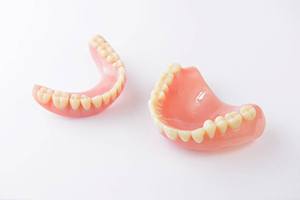 If gum disease, genetics, age, or other circumstances have robbed you of many of your teeth, you may be an ideal
candidate for dentures from our Abington team. This restorative treatment can quickly and comfortably replace missing teeth
so you can get back to enjoying a confident, functional, and complete smile. Get in touch with us today to set up a
consultation — we look forward to serving you!
If gum disease, genetics, age, or other circumstances have robbed you of many of your teeth, you may be an ideal
candidate for dentures from our Abington team. This restorative treatment can quickly and comfortably replace missing teeth
so you can get back to enjoying a confident, functional, and complete smile. Get in touch with us today to set up a
consultation — we look forward to serving you!
Who Is a Good Candidate for Dentures?

Almost anyone who has suffered the loss of multiple teeth may be a good candidate for dentures! Of course, you will need to attend a consultation with our team so we can confirm that this restorative treatment is right for you. After a thorough examination, we will discuss your tooth replacement options and get started on planning the details of your journey to once again having a complete, confident, and functional smile.
Effects of Missing Teeth

Missing teeth can be the result of gum disease, accidents, certain lifestyle choices, genetics, and other factors. Regardless of why you have an incomplete smile, your condition may pose a number of difficulties on a daily basis.
For example, you may not be able to eat a wide variety of foods, which can deprive you of important nutrients. You may also feel self-conscious about your appearance and tend to shy away from social situations. Additionally, your speech may not be as clear and crisp as you would prefer.
Fortunately, high-quality dentures can reduce or eliminate many of the inconveniences associated with extensive tooth loss.
What Qualifies You for Dentures?
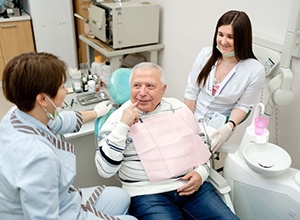
Dentures may be a good fit for you if:
- You have lost most or all of your teeth throughout one of your dental arches. If you have lost just one or two teeth, an alternative tooth replacement treatment may be a better option.
- Your gums and jawbone are healthy enough to support dentures. If they are not, they may become so after some restorative care.
- You are looking for a cost-effective way to rebuild your smile. Traditional dentures are one of the more affordable types of tooth replacement.
Alternative Tooth Replacement Options
If dentures are not a good fit for your situation, you may qualify for an alternative form of tooth replacement:
- A dental bridge is a multi-unit prosthetic that uses crowns to support one or more artificial teeth. Bridges can be very sturdy and often last for a decade or longer. However, they do require that the supporting teeth be modified.
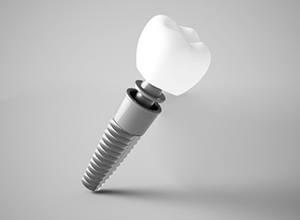
- Dental implants are small titanium posts that get inserted into the jawbone. They act as prosthetic tooth roots and can support crowns, bridges, and dentures. Throughout the world of dental medicine, they are regarded as the gold standard of tooth replacement due to the many benefits they offer, including outstanding strength and durability.
Types of Dentures
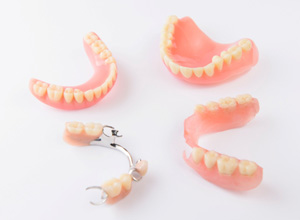
There are a few different types of dentures. During your consultation, we will assess the extent of your tooth loss, the health of your oral tissues, and other relevant factors before we make a treatment recommendation. We might determine that a partial, full, or implant denture is the best fit for your circumstances.
Partial Dentures
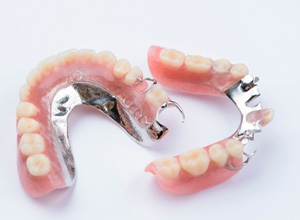
As their name implies, partial dentures fit in around the remaining natural teeth. Small metal or acrylic clasps help them stay in place, and they can fill in gaps at different locations throughout a dental arch.
Full Dentures
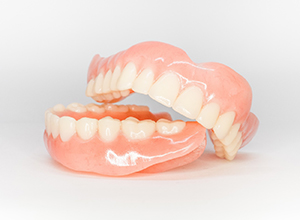
A full denture replaces either all of the upper or lower teeth. These prosthetics consist of an acrylic base along with porcelain or acrylic teeth. Each denture is carefully customized to fit the mouth of the person who will wear it. Natural suction or adhesive helps dentures to stay secure throughout daily activities.
Implant Dentures
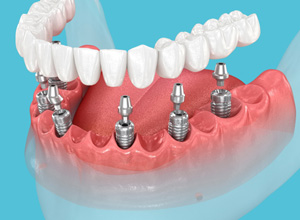
Implant dentures do not rely on suction or clasps to stay in place. Rather, they are anchored in the jawbone via prosthetic tooth roots (dental implants) that are surgically placed into the jawbone. Therefore, they are incredibly strong and sturdy. Due to their many benefits, we often recommend them as the best form of tooth replacement.
Benefits of Full Dentures

Extensive tooth loss can have devastating consequences for your mental and physical health, as well as for your overall quality of life. Full dentures have the potential to reduce or eliminate many of the problems that come with edentulism (the state of being toothless). They may make you feel like your old self again! What are some of the specific benefits that you may experience after you get your new prosthetic teeth? Read on below to find out:
Psychological Benefits

Often, edentulous people suffer mentally and emotionally. They may withdraw from social situations due to self-consciousness about their appearance; tooth loss can lead to a gummy smile and hollow-looking cheeks. They may also be embarrassed to eat in front of others. Additionally, speech difficulties could cause them to talk as little as possible. As a result, they may become isolated.
If that situation sounds all too familiar, you may find that dentures are truly lifechanging. They look incredibly natural and can restore some chewing power. You may be able to visit friends and family — and meet new people — with confidence.
Clearer Enunciation

Clear speech occurs when there are precise interactions between the oral structures, including the teeth. Without teeth, it may be difficult or even impossible to clearly enunciate certain sounds.
When you first get dentures, you might notice a slight lisp when you talk. With practice, however, that issue should disappear. Ultimately, you can expect your speech to be clearer than it was before you received your prosthetic.
Improves Nutrition

Without teeth, you may gravitate toward soft foods that require little to no chewing. As a result, you might miss out on the nutrients that are present in tougher items, such as certain fruits, vegetables, and lean proteins. Your body might not be getting all the fuel it needs to function its best!
Full dentures can restore a degree of chewing power and allow you to expand your dietary choices. In fact, after you adapt to eating with your prosthetic, there should be very few foods that you cannot easily consume!
Preserves Oral Health

Full dentures may support your oral health in a couple of ways:
- By allowing you to eat a balanced diet, dentures can help you get the nutrients you need to reduce the risk of oral infections.
- Dentures can give you an added reason to care well for your oral hygiene. As a result, you may be less prone to gum sores and bad breath.
Expands Opportunity

If you have big career ambitions, being without teeth might prove to be an obstacle to your goals. Sadly, people with poor oral health are less likely to be employed. You may also find that a lack of teeth gives others the wrong impression about your age, disposition, and abilities. In contrast, a full set of attractive teeth can convey the idea that you are approachable, youthful, and energetic. Dentures might just help you reach the next level in your career!
How Dentures Are Made
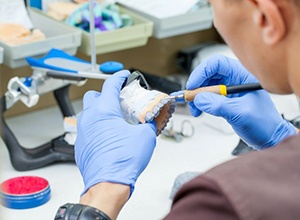
We must custom-design dentures for each patient. Without this careful attention to detail, your prosthetic would not look or feel right! Have you ever wondered what dentures are made of, or have you had questions about the specific steps that go into their creation (both in our office and in our partner laboratories)? Below, you will find fascinating information. What you discover might just enhance your appreciation for the functional and attractive set of teeth that you will soon receive!
What Are Dentures Made Of?
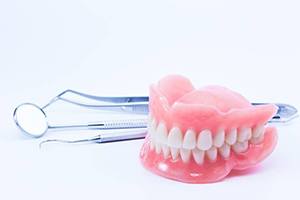
A denture is a prosthesis that consists of two main parts:
- A gum-colored base. This supports the artificial teeth and is secured on a patient’s gums via natural suction or with the help of a mild denture adhesive. In partial dentures, the base includes small metal or acrylic clips that attach to the natural teeth.
- Artificial teeth. These are often constructed of acrylic or porcelain. Both materials closely resemble the look of natural teeth and can maintain their function and appearance for years.
The Denture Creation Process
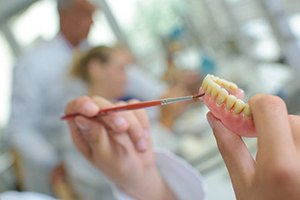
If you are interested in getting dentures, contact our Abington dental team to schedule a consultation. After we thoroughly examine your mouth and talk to you about your smile goals, we will recommend a tooth replacement solution that is a fit for your oral health and your circumstances. If we decide that dentures will work for you, we will begin the denture process by taking some impressions, photos, and measurements of your mouth. This data will serve as the foundation for designing your denture.
At later appointments, we will take further measurements of your mouth to help us determine the ideal length and shape of your new teeth. We will also use a wax model from a trustworthy dental laboratory to test the fit and appearance of your prosthesis. After further coordination with the lab, they will send us your final denture. We will make any necessary adjustments and coach you on how you can care for it and adapt to daily life with your new smile. The entire process may take anywhere from a few weeks to a few months; we will discuss the timeline with you in detail during your consultation.
Adjusting to Your New Dentures

It can take a month or longer to completely adapt to new dentures. At first, your mouth might feel sore and sensitive. You might produce more saliva than usual, and you could notice a slight lisp in your speech. With time and practice, such issues should go away. In fact, you can expect your prosthetic to have a significant positive effect on your ability to speak clearly and eat with confidence. If you have any questions or concerns during the adjustment period, our team will be happy to assist you.
Understanding the Cost of Dentures
The cost of dentures in Abington is different from patient to patient. When you come in for your restorative consultation, our team will be able to crunch some numbers and help you compare your payment options. Generally speaking, traditional dentures are one of the most cost-effective ways to replace missing teeth.
Factors that Affect the Cost of Dentures
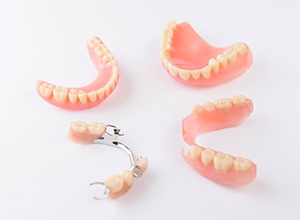
Some factors that influence the price of dentures in Abington include:
- Preparatory treatments. If you require extractions, gum disease treatment, or other procedures before getting dentures, you can expect a higher overall cost.
- The base of dentures is usually made out of acrylic, and the teeth may be constructed out of porcelain or acrylic. The quality of these materials can influence cost.
- The type of denture. Full dentures, partial dentures, and implant dentures have different price points.
Be wary of any advertisements you see for “cheap” or “bargain” dentures. Remember, you tend to get what you pay for!
Are Implant Dentures More Expensive?
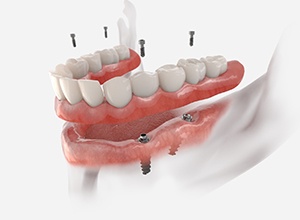
Yes, implant dentures cost more than traditional forms of tooth replacement. The added expense comes from the fact that the process for implant dentures is much more complex and time-consuming than that for traditional dentures.
However, keep in mind that even though implant dentures cost more upfront than traditional prosthetics, they actually offer an excellent value. They tend to last for a very long time, whereas regular dentures typically need to be replaced every 5 – 7 years. Plus, implant dentures offer remarkable oral health benefits that are impossible to assign a monetary value to. For example, they can prevent the jawbone from deteriorating.
Does Dental Insurance Cover Dentures?

In most cases, yes, dental insurance covers dentures. They are usually classed as a major procedure, meaning that around 50% of their cost is covered, up to the amount of a plan’s annual maximum. Our team will be pleased to help you figure out the specifics of how your policy applies, and we will file all necessary paperwork on your behalf. It is also fairly standard for insurance to cover preliminary treatments that are sometimes necessary before placing dentures.
Other Options for Making Dentures Affordable

As your denture dentist in Abington, we want to help you afford your prosthetic. To that end, we offer a few useful provisions:
- Most patients qualify for third-party financing through CareCredit. Many payment plans come with little or no interest.
- Essential Dental Plan. This discount plan can reduce your out-of-pocket cost for almost any dental service.
- Free dental implant consultation. If you have your eye on implant dentures, you can get started on your journey for free.
Would you like to learn more about dentures and their cost? Our team is ready to answer your questions. Contact us today to book a consultation.
Dentures Aftercare

Dentures from our Abington team can last for several years, but only if you take good care of them! One important thing you must do is attend regular dental visits. During these appointments, we will inspect your prosthetic and examine your oral tissues; we are often able to detect problems in their early stages, well before they become serious. We can also provide personalized tips on home care and perform periodic relinings (adjustments) to help your denture maintain a comfortable and secure fit.
Beyond visiting us, what else can you do to keep your dentures in good shape? Here are some practical aftercare tips:
Removable Dentures
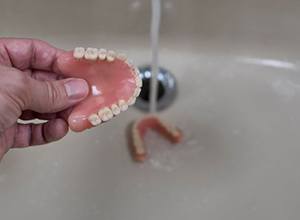
Remove After Eating
After each meal, it is important to remove your dentures and rinse them thoroughly. Doing this helps clear away food particles and prevents bacteria from building up, which can reduce the risk of gum irritation and unpleasant odors. Be sure to use cool or lukewarm water; extremely hot water could warp your dentures.
Clean Your Restoration
Cleaning your dentures daily is essential for keeping them in good shape and protecting your oral health. Use a soft-bristle brush and a mild denture cleanser to gently scrub all surfaces of your prosthetic. Avoid using regular toothpaste, as it can be too abrasive and may cause scratches. Set aside a few minutes each day for this routine, making it part of your morning or evening schedule. If you have questions about how to properly clean your dentures, our team would be happy to demonstrate effective techniques.
Keep Your Dentures Safe
Protecting your dentures from damage is important for their long-term use. When you are not wearing them, store them in a container filled with water or a denture solution. This prevents them from drying out and keeps their shape intact. Always handle your dentures over a soft surface, like a towel or a sink full of water, to avoid damage from accidental drops. Also, be mindful of where you place your dentures when you are not wearing them. You do not want a curious pet or small child to run off with them!
Remove When You Sleep
Taking your dentures out at night helps your gums rest and recover from the pressure of wearing them all day. It also reduces the risk of infection and oral irritation and allows you to thoroughly clean your oral tissues. Before bedtime, remove your dentures and soak them in a cleaning solution recommended by your dentist. In the morning, thoroughly rinse your prosthetic before you place it back in your mouth.
Notice Changes
Pay close attention to how your dentures feel and look. If you notice discomfort, looseness, or changes in your mouth, reach out to our dental team as soon as possible. We will inspect your dentures and learn about your symptoms so we can recommend your next steps. We can perform some denture repairs in-house, but for other issues, we might have to send them to a laboratory or even replace them altogether.
Denture FAQs
How Long Will You Have to Wait to Get Dentures After Your Teeth Are Pulled?
Most patients must wait 6 – 8 weeks between extractions and denture placement. This allows time for the gums to heal before they are required to support a prosthetic.
However, some patients opt to get an immediate denture, which is prepared before extractions and placed immediately afterward. This option can add to the overall cost of your procedure, and your immediate denture will require some significant adjustments as your mouth changes after extractions. However, many patients deeply value the ability to get their new smile as soon as possible.
If you want implant dentures, you may have to wait a few months or longer after extractions before your new teeth are in place.
Can I Sleep with My Dentures?
When you first get your new teeth, your denture dentist in Abington may instruct you to wear them for a full 24 hours. Thereafter, you should take them out every night. Removing them allows you to thoroughly clean your mouth, clean your denture, and give your gums a chance to rest. Failing to remove them could lead to infections, sores, and unpleasant odors.
If you want to be able to keep your teeth in your mouth all of the time, ask us about fixed implant dentures. They are only removed during dental appointments.
Will It Hurt to Get Dentures?
If you have to undergo extractions before getting dentures, you can expect some soreness after your tooth removal procedure. Most patients are feeling better within a week or so. In the meantime, taking pain medications and getting plenty of rest can help to mitigate any discomfort.
When you first get your new dentures, your mouth may experience some minor irritation. As you adjust to your prosthetic, it should begin to feel more and more natural. Most people adapt within a few months of getting their denture.
Is It Hard to Talk with Dentures?
Ultimately, dentures have the potential to improve the clarity and ease of your speech. That is because clear enunciation depends on complex interactions between the tongue and teeth. However, there will be a bit of a learning curve when you first get your denture. You might have a lisp for a while. Try to practice talking as much as possible, whether that involves reading out loud or chatting with family members.
If you find that your dentures often slip in your mouth while you are speaking, you might need to get them adjusted. It is also possible that you should start using adhesive to keep them in place.
What Type of Denture Adhesive Should I Use?
Denture adhesives come in several forms, including creams, powders, strips, and pads. Each type offers unique benefits. Creams provide a strong hold and are easy to apply, while powders offer a thinner layer and may be less messy. Strips and pads are convenient for travel and can be simpler to use. The best selection for you depends on your preferences, oral anatomy, and the fit of your dentures.
Our team can recommend products that we believe you may find both effective and easy to use. However, keep in mind that it might take a bit of trial and error before you find an adhesive that you like and that you are completely comfortable using.
Can I Reline My Dentures Myself?
Relining refers to adding material to the inner surface of your dentures’ base to improve their fit. Over-the-counter kits are available for home use, and they can seem attractive due to their affordable price. However, keep in mind that performing a reline yourself can carry significant risks. Even a small mistake in the relining process may cause a poor fit, mouth sores, or damage to your dentures. You might even end up having to replace your dentures prematurely. Therefore, it is both more convenient and probably more economical to have a professional handle your relines.
Our team pays great attention to detail during the relining process. We will also inspect your dentures for damage or other issues that might affect their function. We want you to enjoy maximum benefits from your prosthetic teeth!